Tenerife has many microclimates because Mount Teide, at 3,715 metres, blocks the trade winds. The north is greener, cooler and cloudier; the south is drier and sunnier; and conditions change quickly with altitude. Understanding this helps you choose where to live and how to plan your days.
The main zones
| Zone | Typical winter conditions | Examples |
|---|---|---|
| South coast | Sunny, dry, warmest | Los Cristianos, Costa Adeje |
| North coast | Milder sun, more cloud and showers | Puerto de la Cruz, Garachico |
| North-east hills | Cooler, often misty | La Laguna |
| Mid altitudes | Cool, can be cloudy | Vilaflor, La Esperanza |
| High mountain | Cold, very clear, frost or snow possible | Teide National Park |
The cloud sea
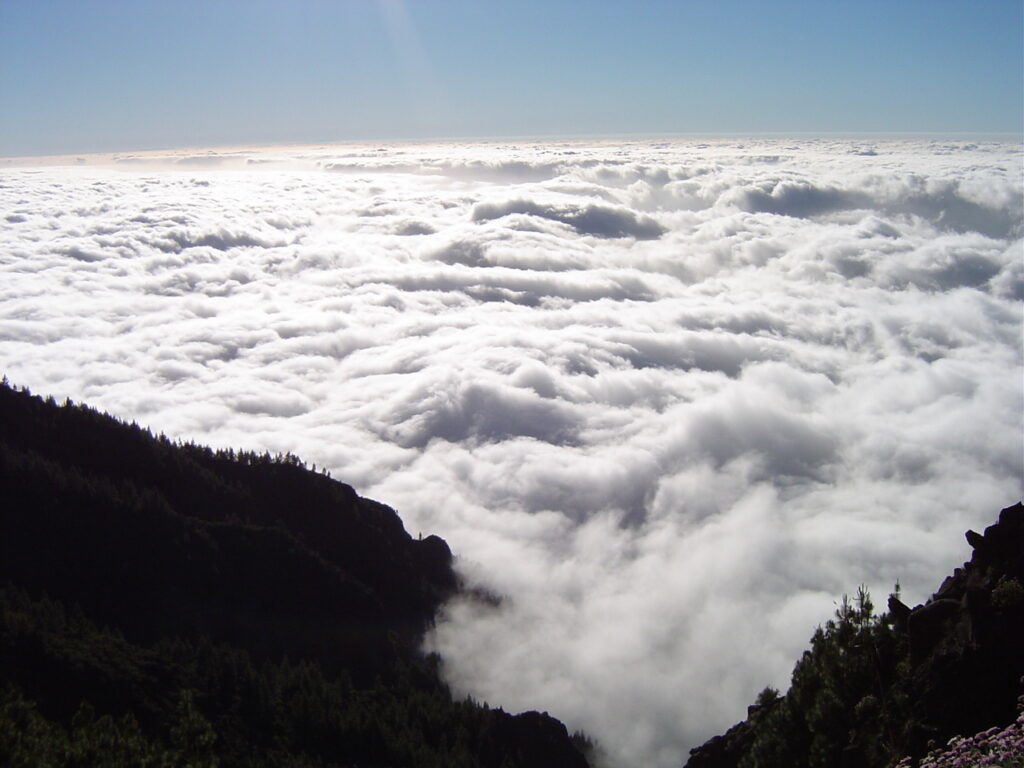
On many days a band of cloud sits on the northern slopes between about 600 and 1,500 metres. Drive up through it and you emerge into bright sunshine above, with Teide in view.
Why it matters for long-stayers
- Choose a base on the side of the island that matches the weather you want.
- If your base is cloudy, a sunny day is often 30-60 minutes away.
- Hikers should always carry layers: it can be 22°C at the coast and near freezing on Teide on the same day.
How to check
Use local webcams and forecasts for specific towns rather than one forecast for the whole island.
Our verdict
Tenerife’s microclimates are a feature, not a problem. They give you a choice of weather every day. More in the Tenerife guide.